 . It shows us the city of Minsk. It has traveled a distance of 1,568 kms in 36 days.
  . It shows us the city of Minsk. It has traveled a distance of 1,568 kms in 36 days. , are from postcrossers living in the capital city Minsk. I do not often receive cards from Belarus. Althought it is on the 6th ranking by most sent postcards. I do not remember that it was a top country in 2012. So I guess the chance to receive a postcard from this country is much higher nowdays. This card has traveled a distance of 1568 kms in 49 days. It is an art card. It shows a painting from the collection of the National Art Museum.
 . It has traveled a distance of 1,705 km in 8 days. It shows us the Mother of God of Scapular Church.
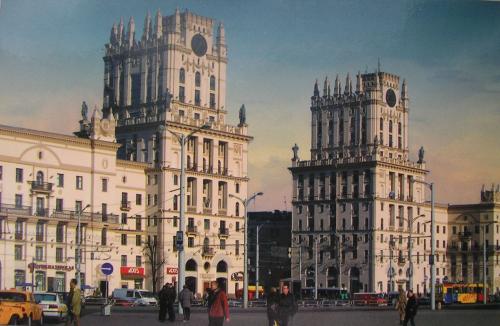
 in my mailbox. I discovered that every official is send from Minsk. This one shows us the station square. It has traveled a distance of 1,568 km in 6 days.
 and if I receive a card, it is most of the time from Minsk. The capital city. This one is from Minsk to. It has traveled a distance of 1,568 km in 14 days.
 . All of them are long shaped cards and were send from Minsk. This one has traveled a distance of 1568 kms in 10 days. It is a very special card for me because it shows the Wawel castle in Kraków, Poland. I have been there last year and I really like Kraków. It's nice to receive a card from something you really like.
 . This one has traveled a distance of 1568 km in 15 days. It shows us a UNESCO site; Mir Castle Complex. It is my third UNESO site from this country.
 while I have to send them very often in the last week to this country. This one is end by Lunushka and show us the Belovezhskaya Pushcha. A UNESCO site which is situated in Poland as well. I have the Polish part already in my collection.
 via the Netherlands RR. It was send by smooth. It shows the Troitsky Suburb and upper town of Misnk, the capital city of Belarus. It is a great nightview during the winter!
 from Belarus via the Slavic Countries RR Group 58. It is my first card from Belarus and my first UNESCO site from that country! It shows the main tower of the Nyasvizh castle.
The Architectural, Residential and Cultural Complex of the Radziwill Family at Nesvizh is located in central Belarus. The Radziwill dynasty, who built and kept the ensemble from the 16th century until 1939, gave birth to some of the most important personalities in European history and culture. Due to their efforts, the town of Nesvizh came to exercise great influence in the sciences, arts, crafts and architecture. The complex consists of the residential castle and the mausoleum Church of Corpus Christi with their setting. The castle has ten interconnected buildings, which developed as an architectural whole around a six-sided courtyard. The palaces and church became important prototypes marking the development of architecture throughout Central Europe and Russia.

